
Natural Cleaning Recipes for Dublin’s Hard Water
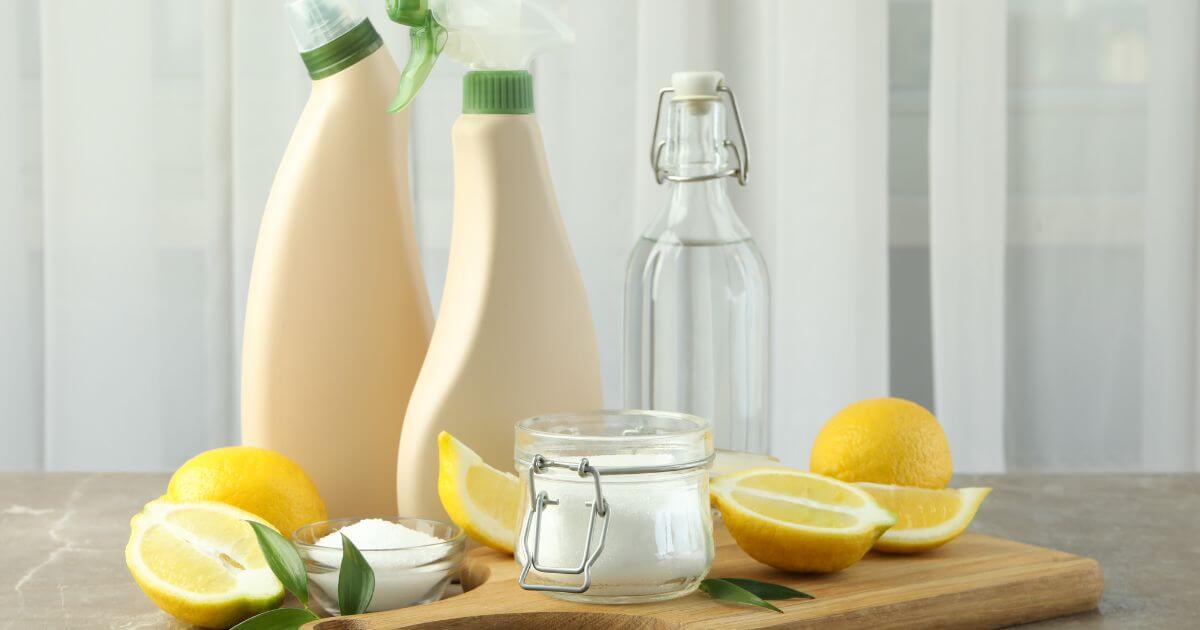
You do not need a cupboard full of products to keep a home clean. White vinegar, lemons and bicarbonate of soda can handle most everyday jobs, and they are especially good against the limescale that Dublin’s hard water leaves on kettles, taps and shower heads.
This guide gives simple recipes for each, where to use them, and just as importantly where not to.
Why natural cleaners work on limescale
Limescale is mostly calcium carbonate, which is alkaline. Mild acids such as vinegar and lemon juice dissolve it, which is why they work so well in hard-water areas. Bicarbonate of soda is a gentle abrasive and deodoriser, useful for scrubbing and neutralising smells.
- White vinegar: descales and cuts through soap scum
- Lemon juice: descales, degreases and leaves a fresh smell
- Bicarbonate of soda: gentle scrub and odour absorber
- All three are cheap and available in Dunnes, Tesco and SuperValu
Recipes to keep in the cupboard
All-purpose spray
Mix one part white vinegar with one part water in a spray bottle. Add a few strips of lemon peel if you want to soften the smell. Use on worktops (not stone), sinks, tiles and glass.
Kettle descaler
Fill the kettle halfway with equal parts water and white vinegar, or water and the juice of two lemons. Bring to the boil, leave for an hour, then empty and rinse, boiling fresh water once or twice to remove any taste. In most of Dublin, doing this monthly keeps the kettle clear.
Shower head soak
Fill a plastic bag with neat vinegar, tie it around the shower head so the nozzles are submerged, and leave for a few hours or overnight. Remove, run the shower for a minute and scrub any remaining deposits with an old toothbrush.
Bicarbonate scrub
Mix bicarbonate of soda with a little water to form a paste. Use on sinks, the hob, grout and the inside of the oven door. Leave for 15 minutes on tougher marks before scrubbing and rinsing.
Fridge and bin deodoriser
Leave an open jar of bicarbonate of soda in the fridge, and sprinkle a little in the bottom of the bin before adding a new liner. Replace every month or two.
Where not to use them
Natural does not mean safe on every surface. Acids can damage some materials, so check before you spray.
- Never use vinegar or lemon on marble, granite, limestone or other natural stone
- Avoid acid on waxed or oiled wood and on unsealed grout for long periods
- Do not use vinegar on the rubber seals of washing machines and dishwashers regularly
- Never mix vinegar with bleach, as it releases a harmful gas
A week of natural cleaning
A simple routine keeps limescale from building up in the first place:
- Daily: wipe and dry the sink and taps after use
- Weekly: vinegar spray on shower screens, taps and tiles
- Monthly: descale the kettle and soak the shower head
- Every few months: bicarbonate scrub on the oven and hob
When natural is not enough
Heavy limescale that has built up over years, or an oven with baked-on grease, may need stronger products and more time than a home routine allows. A deep clean from a professional can reset the kitchen and bathroom so natural products can keep them that way. Mention when you book if you would like the cleaner to use eco-friendly products.
Frequently Asked Questions
Book an Eco-Friendly Clean in Dublin
Want your kitchen and bathroom descaled and reset without the effort? eMop connects you with vetted cleaners across Dublin, from Ranelagh to Blanchardstown, and you can ask for eco-friendly products when you book.
Book a deep or regular clean online at emop.ie.





 Blog



 Previous Post