
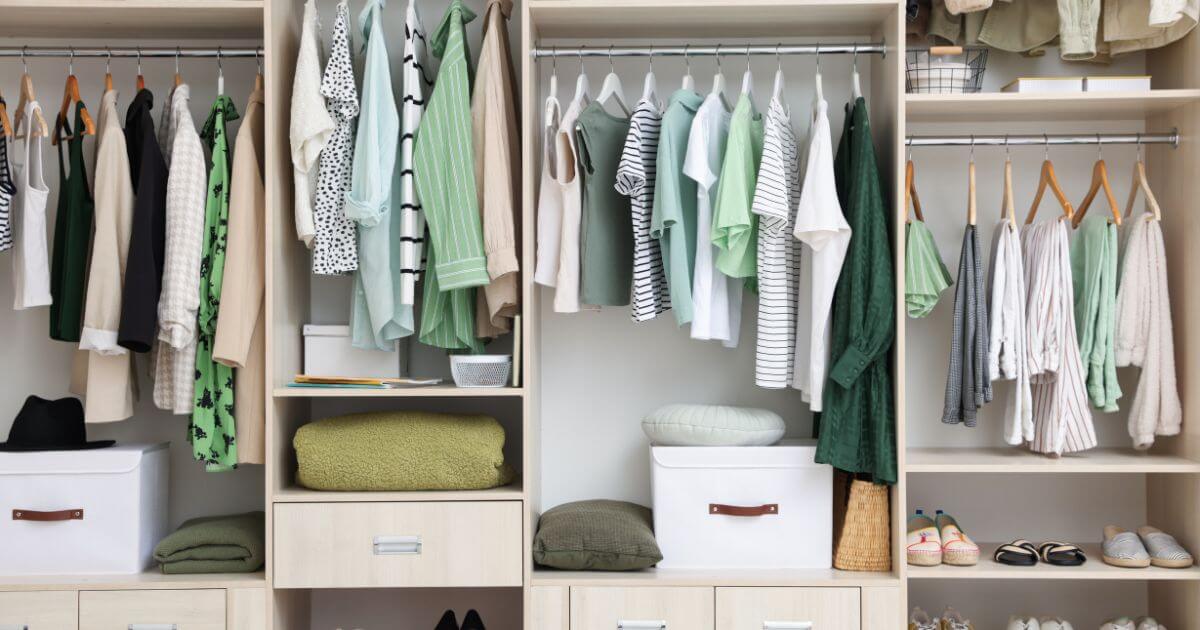
Building a Clutter-Free, Ethical Wardrobe in Dublin
Most wardrobes are half full of things never worn, bought on impulse and rarely reached for. Paring back to what you actually wear, and being a little more thoughtful about what you add, cuts both clutter and waste. It suits the compact storage of Dublin homes, from a shared house in Rathmines to a flat in the Docklands.
This guide covers how to declutter your wardrobe, pass things on responsibly, and rebuild it in a more ethical, less wasteful way.
Start by decluttering honestly
You cannot build a better wardrobe on top of a cluttered one. Take everything out, so you can see the full scale of what you own, and be honest about what you actually wear versus what you keep out of guilt or habit.
A good test is the past year: if you have not worn something in twelve months and it is not seasonal or sentimental, it is likely just taking up space.
- Empty the whole wardrobe so you can see everything at once
- Separate what you wear from what you never reach for
- Be honest about guilt purchases and ill-fitting items
- Keep what fits, suits you and you genuinely wear
Passing things on responsibly
Clothes you let go of do not have to become waste. Dublin has a strong network for giving them a second life, which is a core part of a more ethical approach.
Where things can go
Sort your discards into keep-worthy, resale and recycle piles first.
- Donate good-condition clothes to Oxfam Ireland or St Vincent de Paul
- Sell higher-value or barely-worn pieces through local resale groups
- Recycle worn-out textiles at a Dublin City Council bring centre
- Repair or repurpose where a small fix gives an item more life
Rebuilding more ethically
A more ethical wardrobe is less about buying special things and more about buying less, and better. Choosing well-made pieces that last, and that you will genuinely wear, reduces both waste and the churn of constant replacing.
Second-hand and charity shops across Dublin are an easy first stop before buying new, and often turn up better quality for less.
- Buy less, but choose better-made pieces that last
- Check charity and second-hand shops before buying new
- Favour versatile items that work across your wardrobe
- Care for clothes properly so they last: wash cooler, air-dry, repair
Keeping the wardrobe clutter-free
Once pared back, a simple rule keeps it that way: when something new comes in, something old goes out. Fold or hang so you can see what you own, and a tidy wardrobe stays tidy with almost no effort.
A clear, organised bedroom is also far quicker to clean. If you want the whole room reset after a declutter, an eMop cleaner can handle it, from EUR23 per hour across Dublin.
Frequently Asked Questions
How do I decide what to keep?
If you have worn it in the past year and it fits and suits you, keep it. If it has sat unworn for twelve months and is not seasonal or sentimental, it is likely just clutter.
Where can I donate clothes in Dublin?
Oxfam Ireland and St Vincent de Paul take good-condition clothes. Worn-out textiles can go to a Dublin City Council bring centre rather than the bin.
What makes a wardrobe more ethical?
Mostly buying less and better: well-made pieces you will actually wear, second-hand where you can, and caring for clothes so they last rather than replacing them constantly.
Can a cleaner help after a wardrobe clear-out?
Yes. A cleared bedroom is ideal for a deep clean. An eMop cleaner can reset the room as a one-off or start a regular routine from EUR23 per hour.
Book a Bedroom Clean in Dublin
A pared-back wardrobe and a clean bedroom make the whole room feel lighter. eMop connects you with vetted cleaners across Dublin, from Phibsborough to Dundrum, to reset your space or keep it that way.






 Loading...
 Blog
Blog

 Previous Post